The problem
Rules are trusted because they are explicit, and then nobody checks them. A rule written when a vendor always coded to one account keeps firing after the vendor's mix changes, and the errors look like rule output, so nobody questions them.
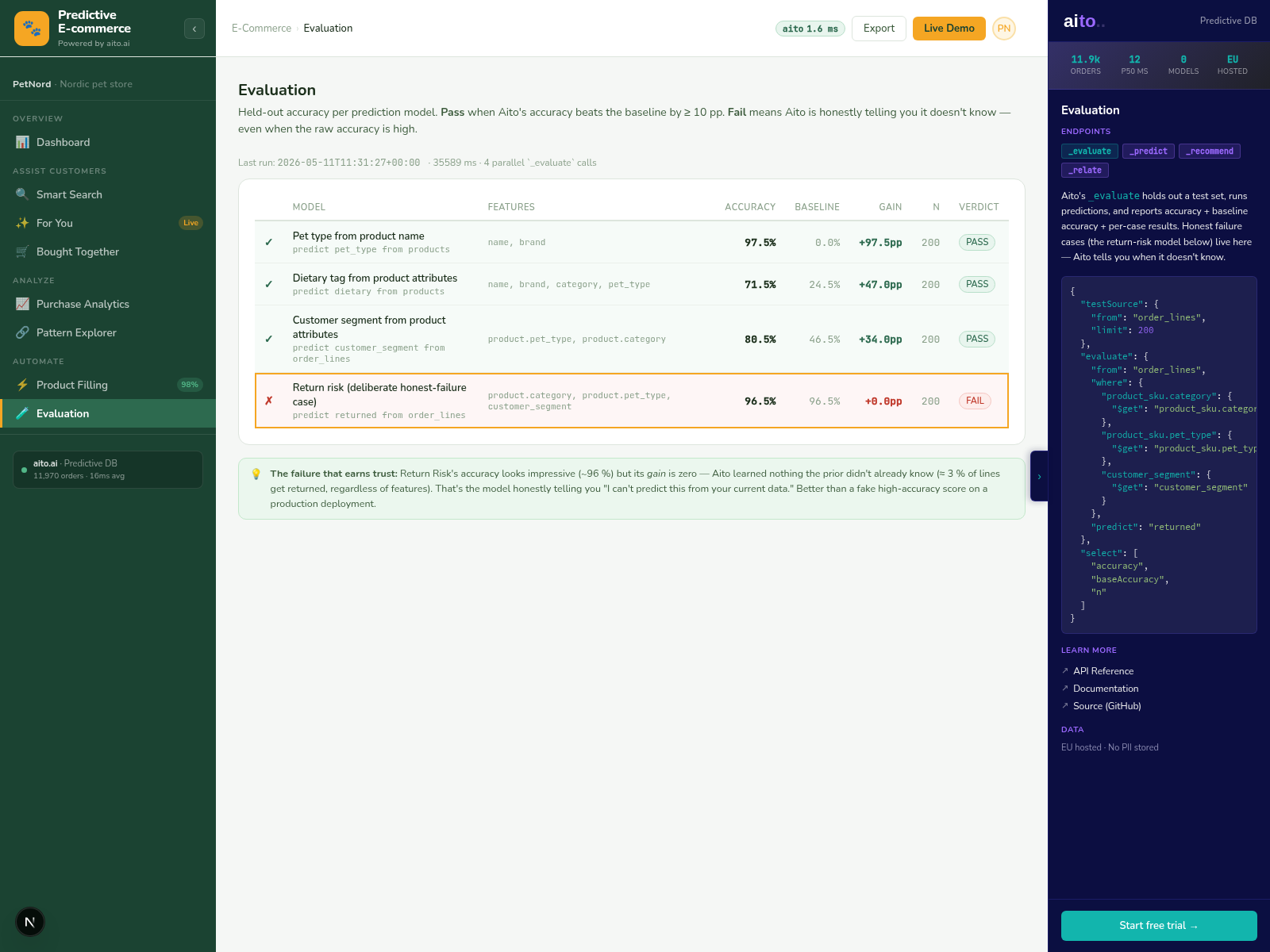
A rule deserves the same scrutiny as a prediction: how often does it fire, and how often is it right?
How it works
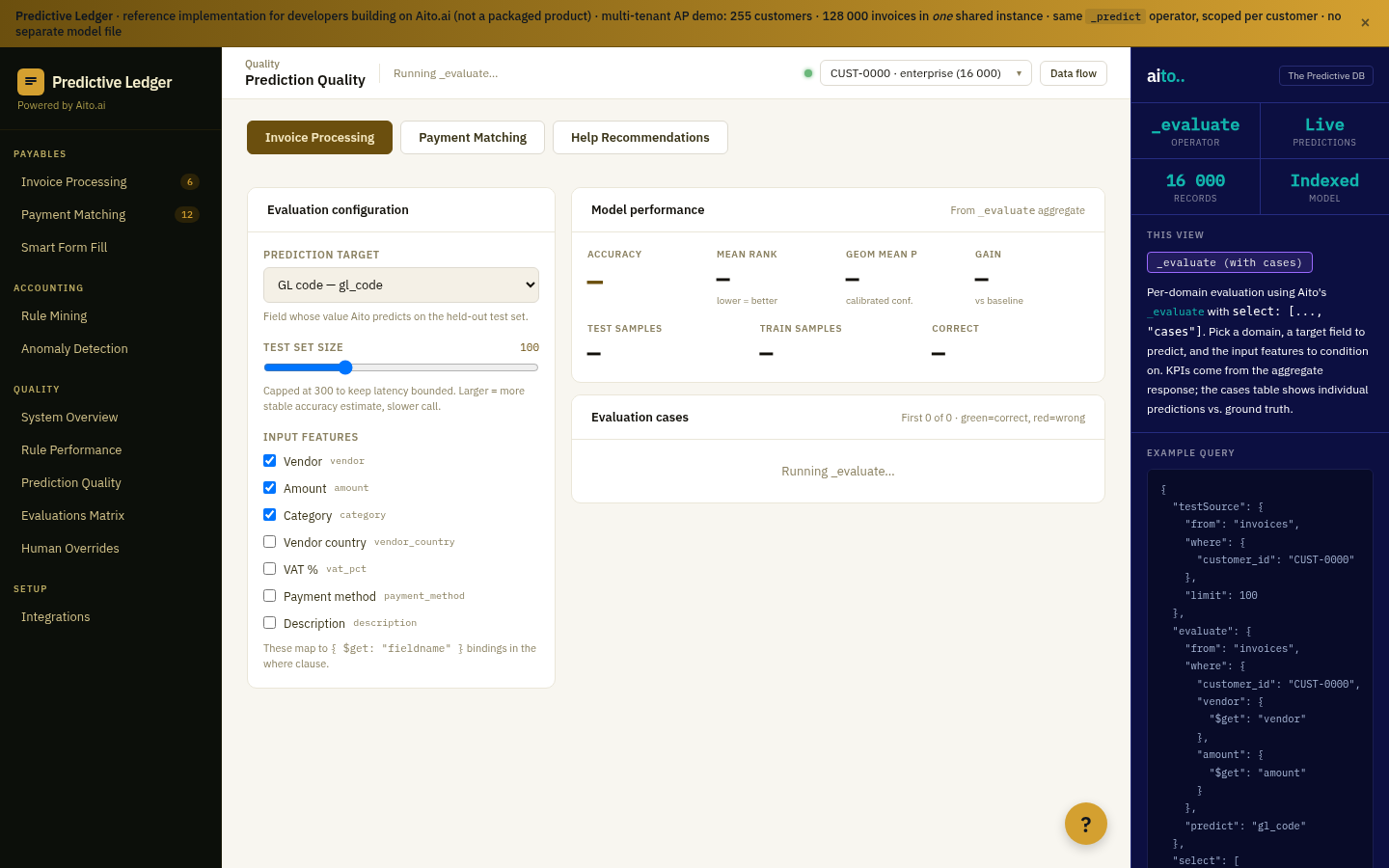
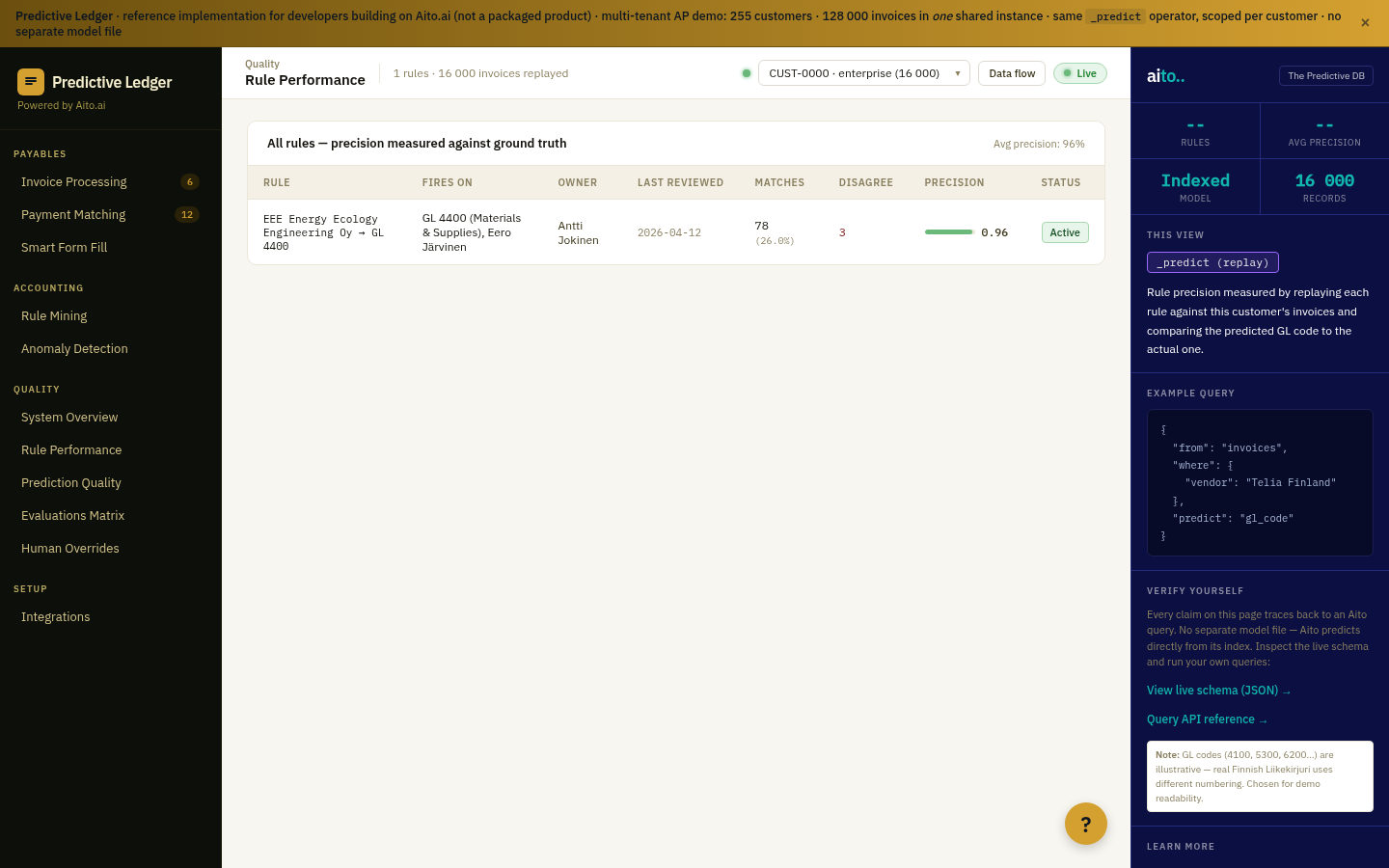
The rules are mined from the tenant's own data with _relate. Each rule is then replayed over the tenant's invoices: where its condition matches, the rule's value is compared with the value that was actually posted. The result per rule is its match count, its disagreements, and its precision, next to its owner and status.
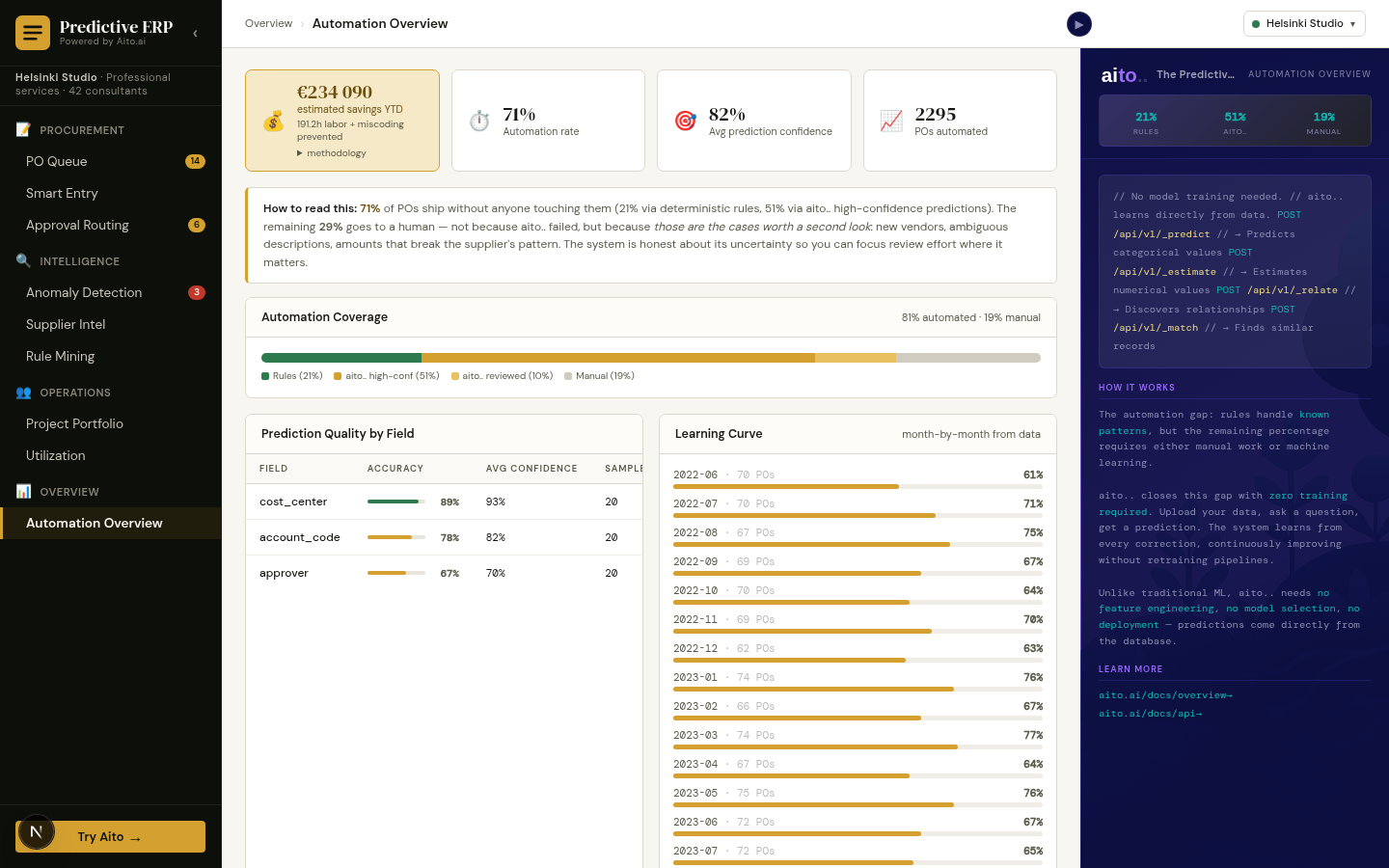
A rule whose precision drops is a candidate for review, the same way a prediction below its confidence threshold goes to a human.
For the full architecture, see the technology overview. For the broader narrative across multiple use cases, read The Predictive Application.
See it live
This use case runs in the 🧾 Accounting demo today. Click through to the live application and inspect the queries that produce the result.