The problem
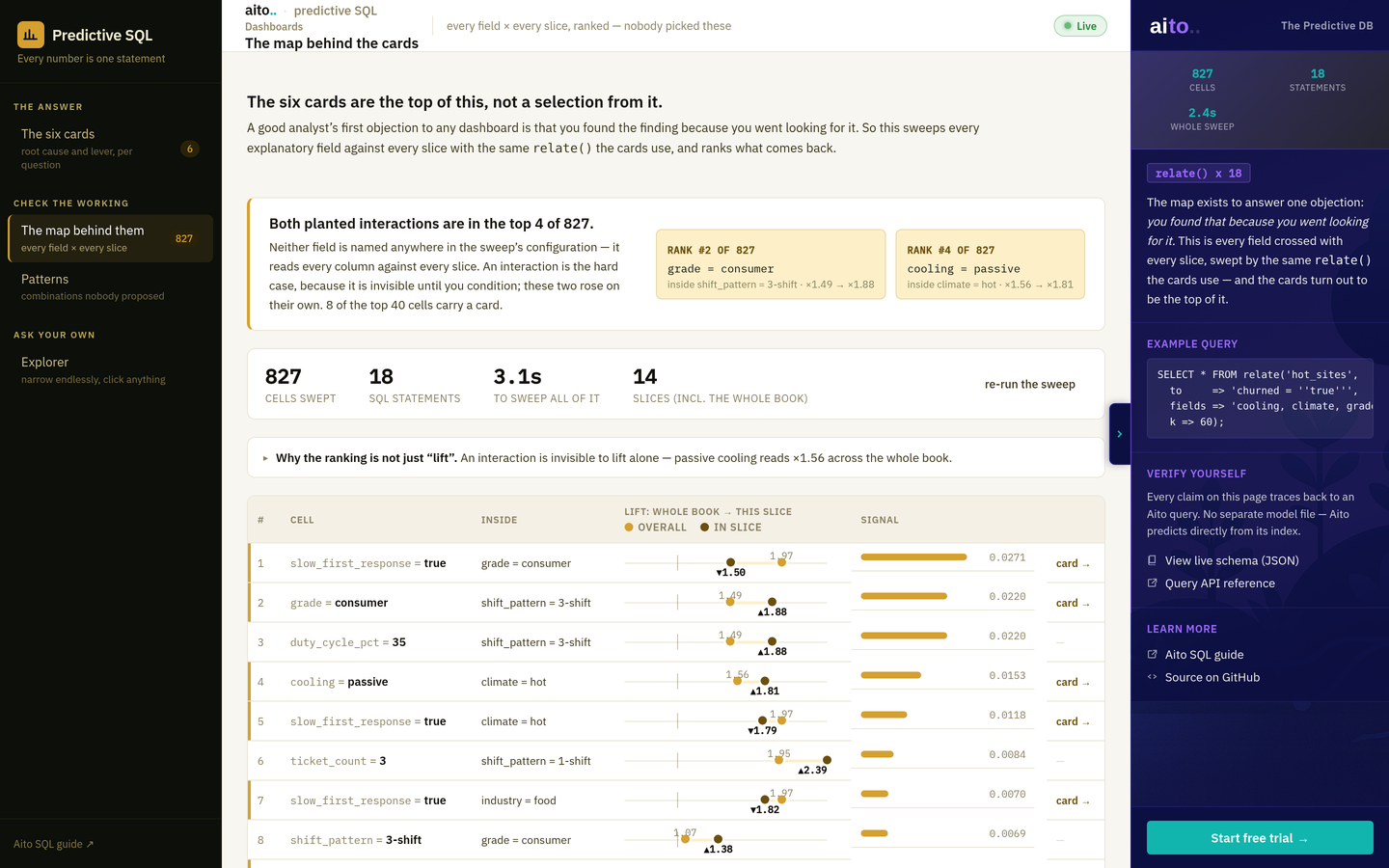
The first objection to any root-cause finding is fair: you found it because you went looking for it. A handful of hand-written analyses cannot answer that. A sweep that nobody curated can.
A sweep also catches what a single ranking misses. A field that is harmless on its own can be dangerous in one context, so its lift over the whole population looks unremarkable. What gives it away is that the lift moves when you condition.
How it works
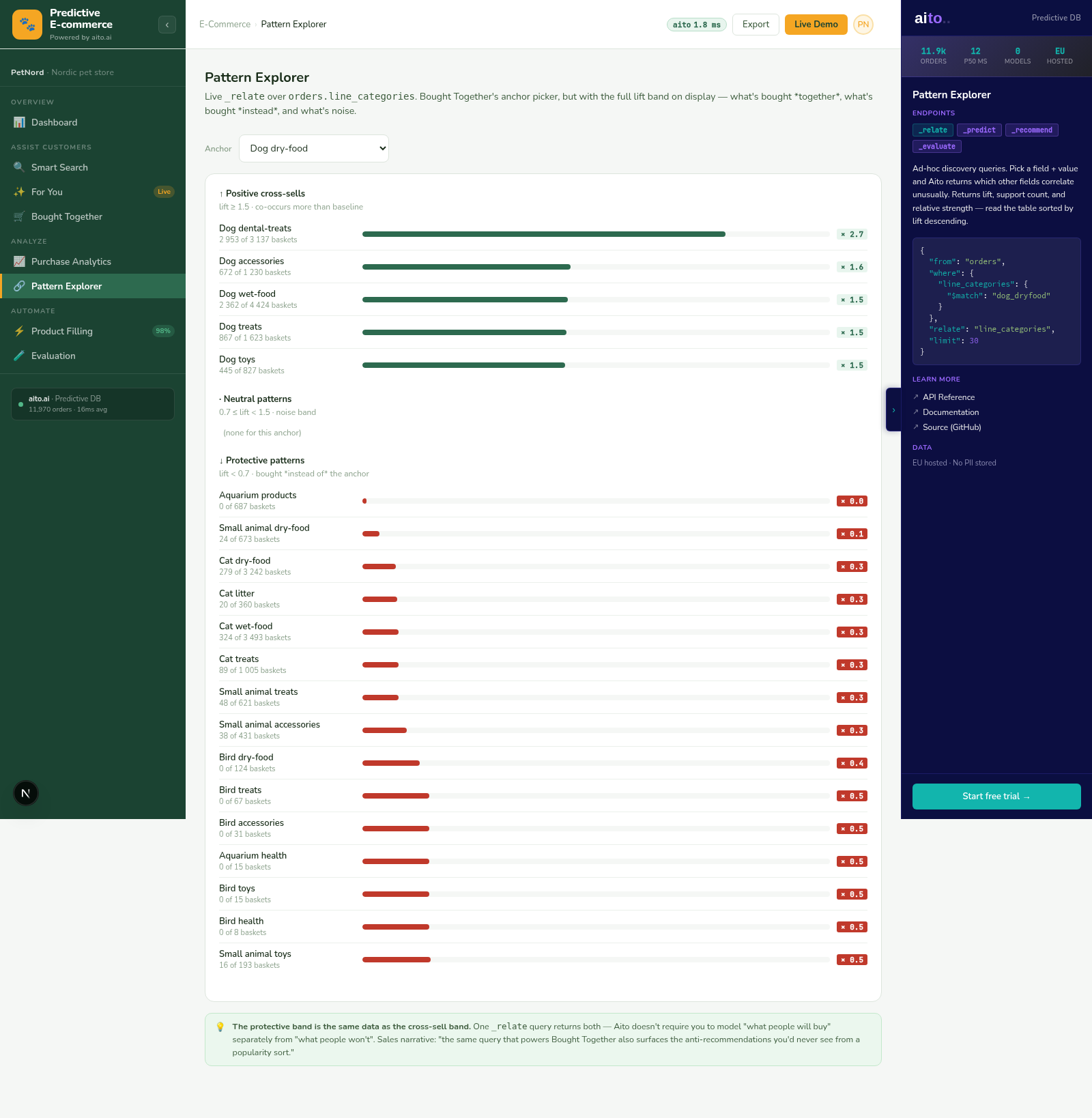
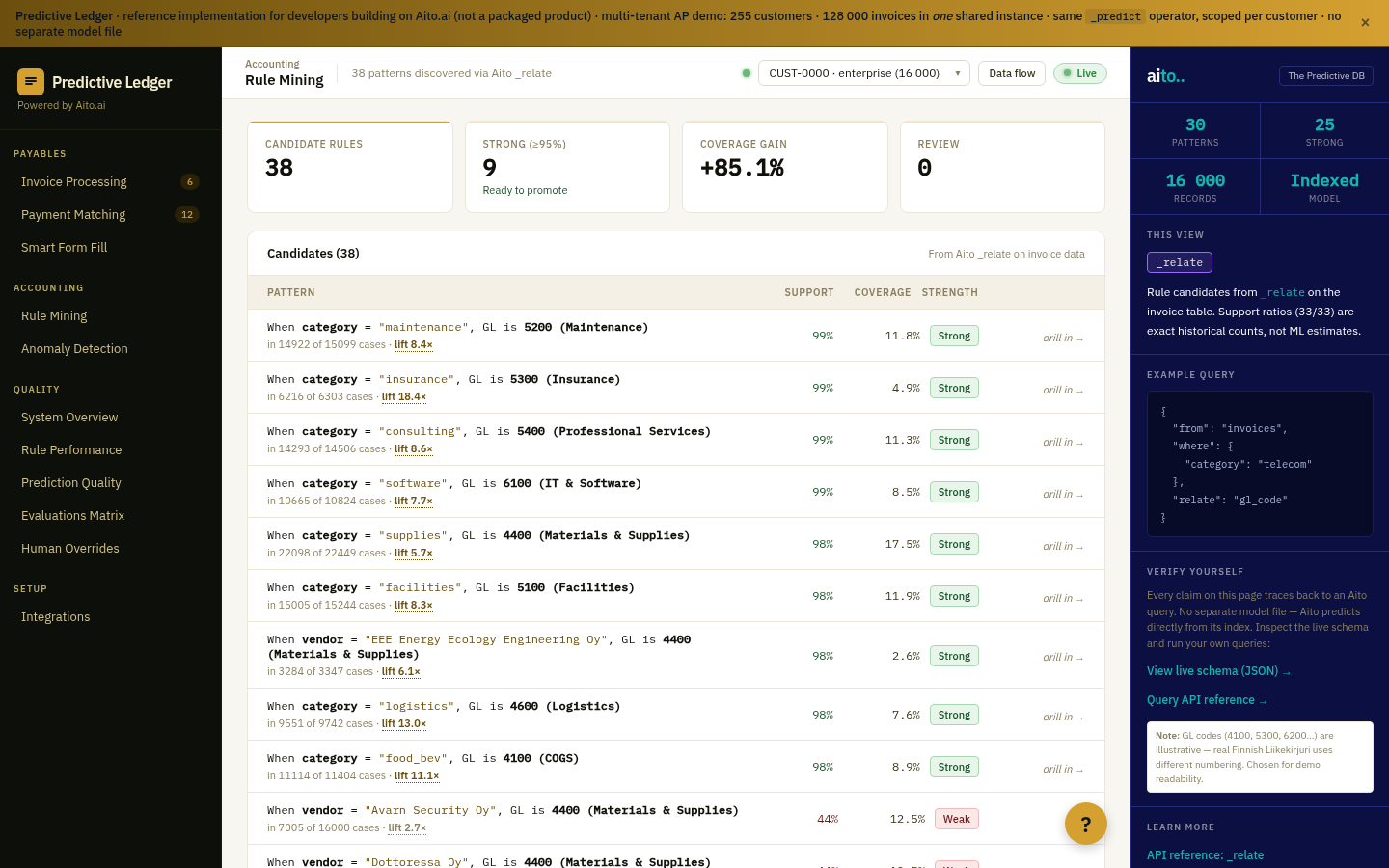
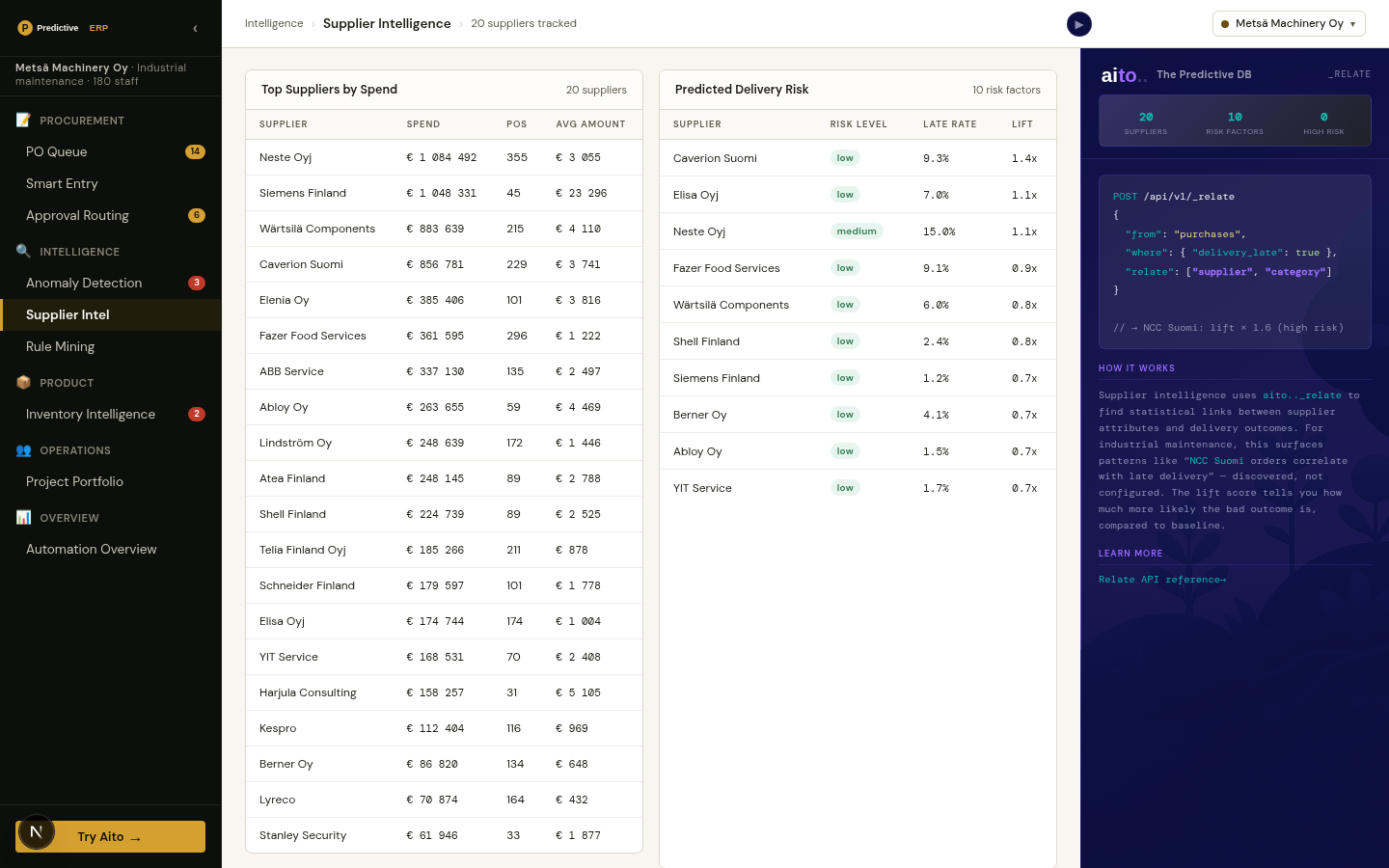
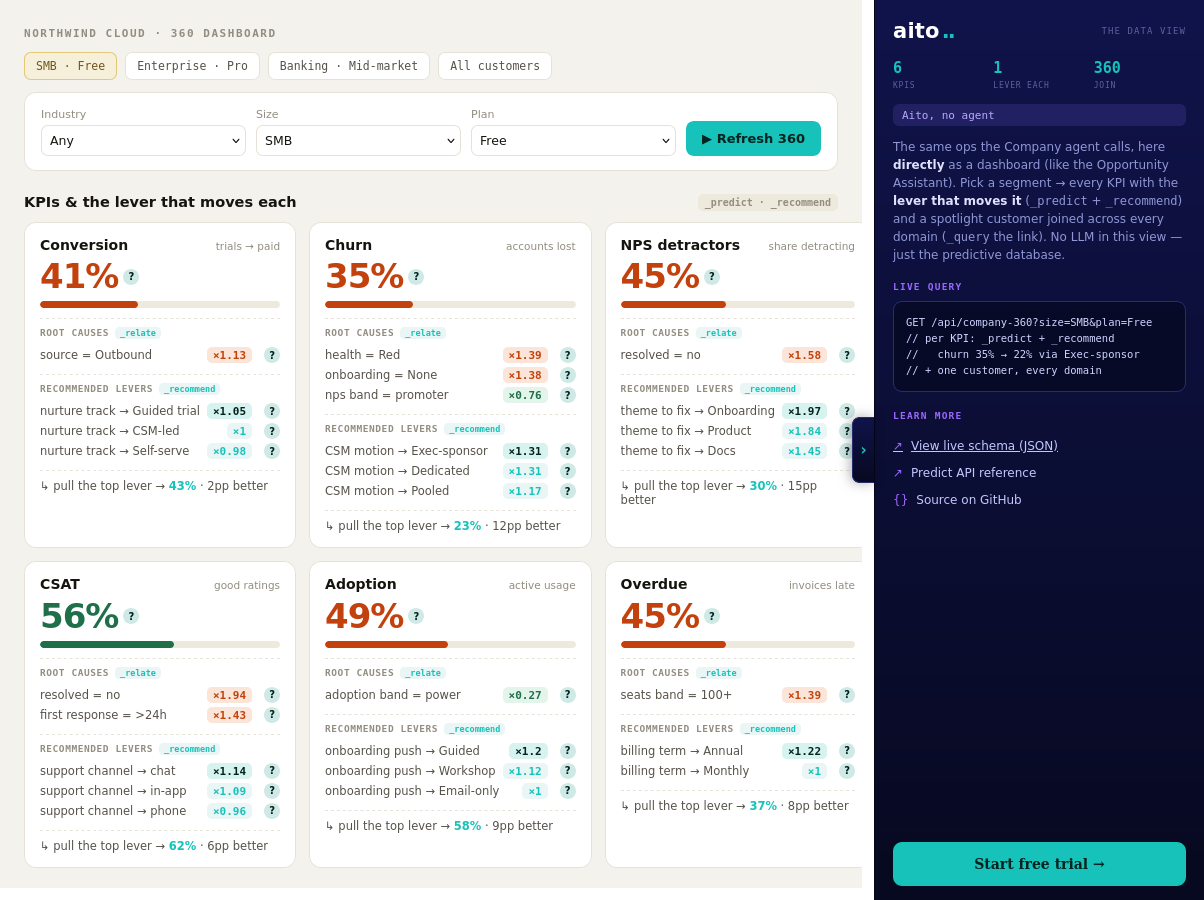
The map runs the same relate() the cards use, once over the whole book and once inside each slice of four context dimensions (climate, shift pattern, machine grade, industry). Every field × value cell gets a lift per slice, and the cells are ranked by how far the lift travelled. The cost is one statement per slice, not one per cell.
Keys, the outcome itself, and near-unique fields are left out of the sweep, since their lifts are noise.
For the full architecture, see the technology overview. For the broader narrative across multiple use cases, read The Predictive Application.
See it live
This use case runs in the 🐘 SQL demo today. Click through to the live application and inspect the queries that produce the result.