The problem
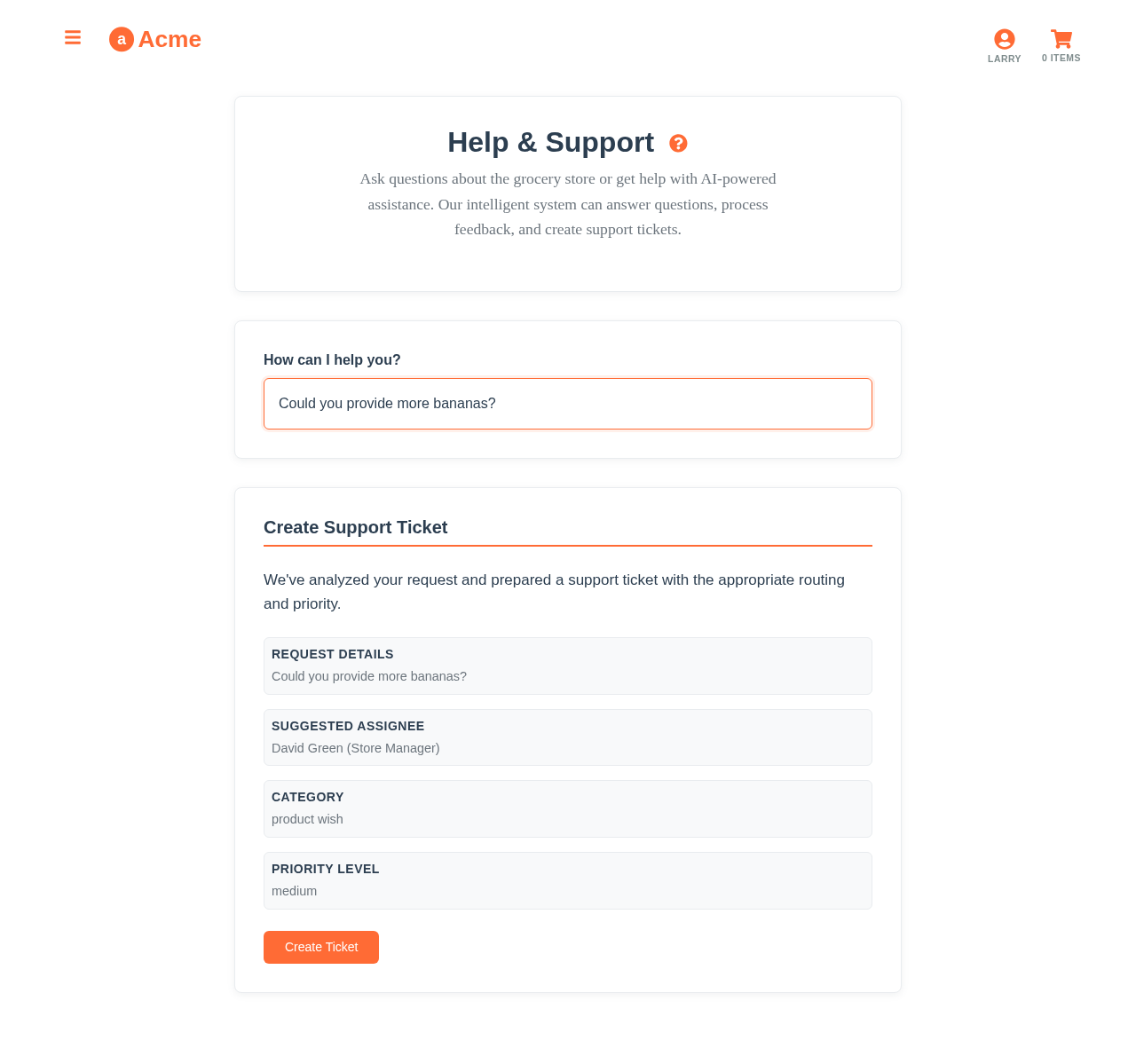
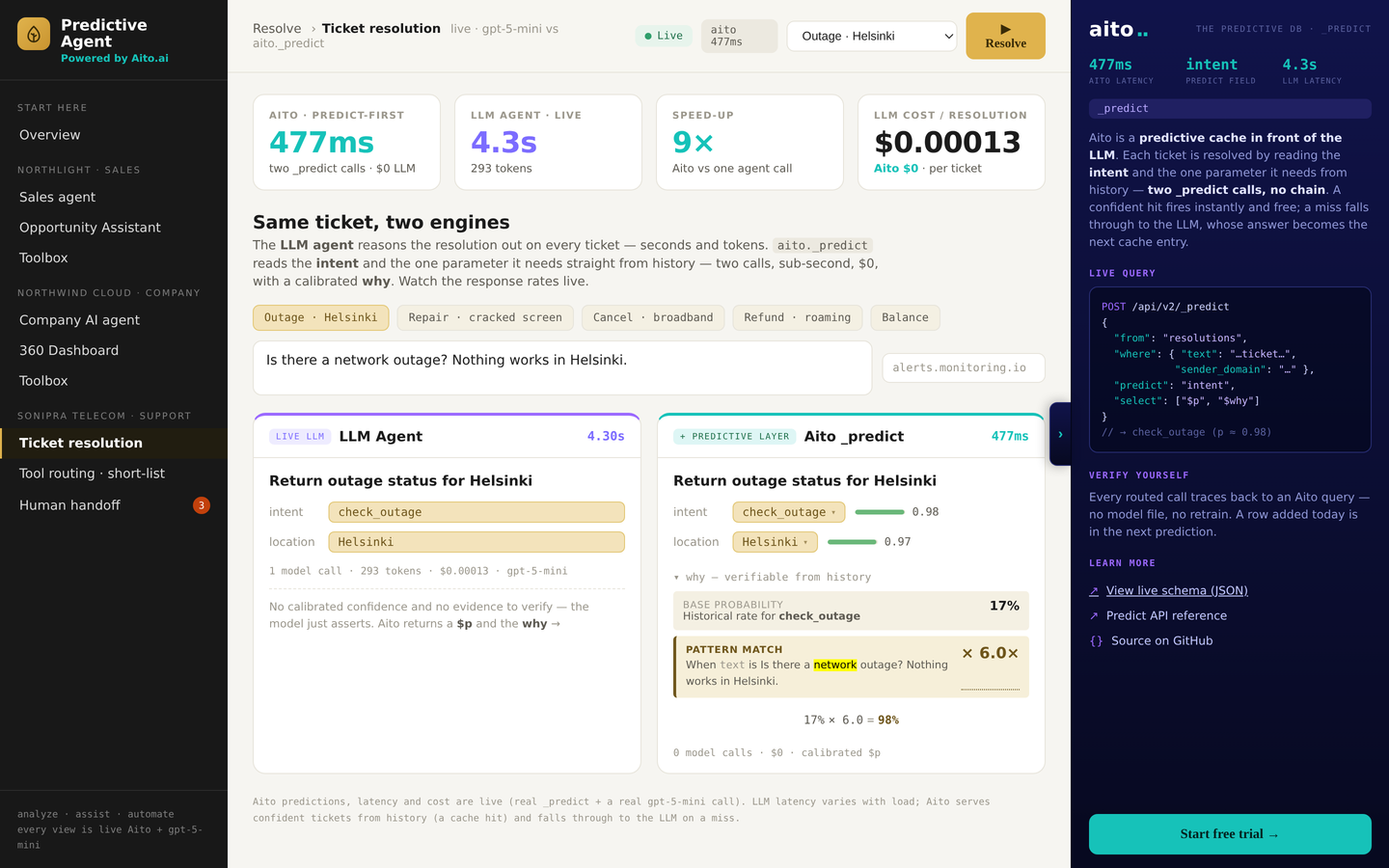
Routing a support ticket means reading it, deciding what the customer wants, and pulling out the one detail the resolution needs. An LLM does this fluently, but every ticket costs a model call, takes seconds, and comes back with no confidence to decide whether a human should look.
How it works
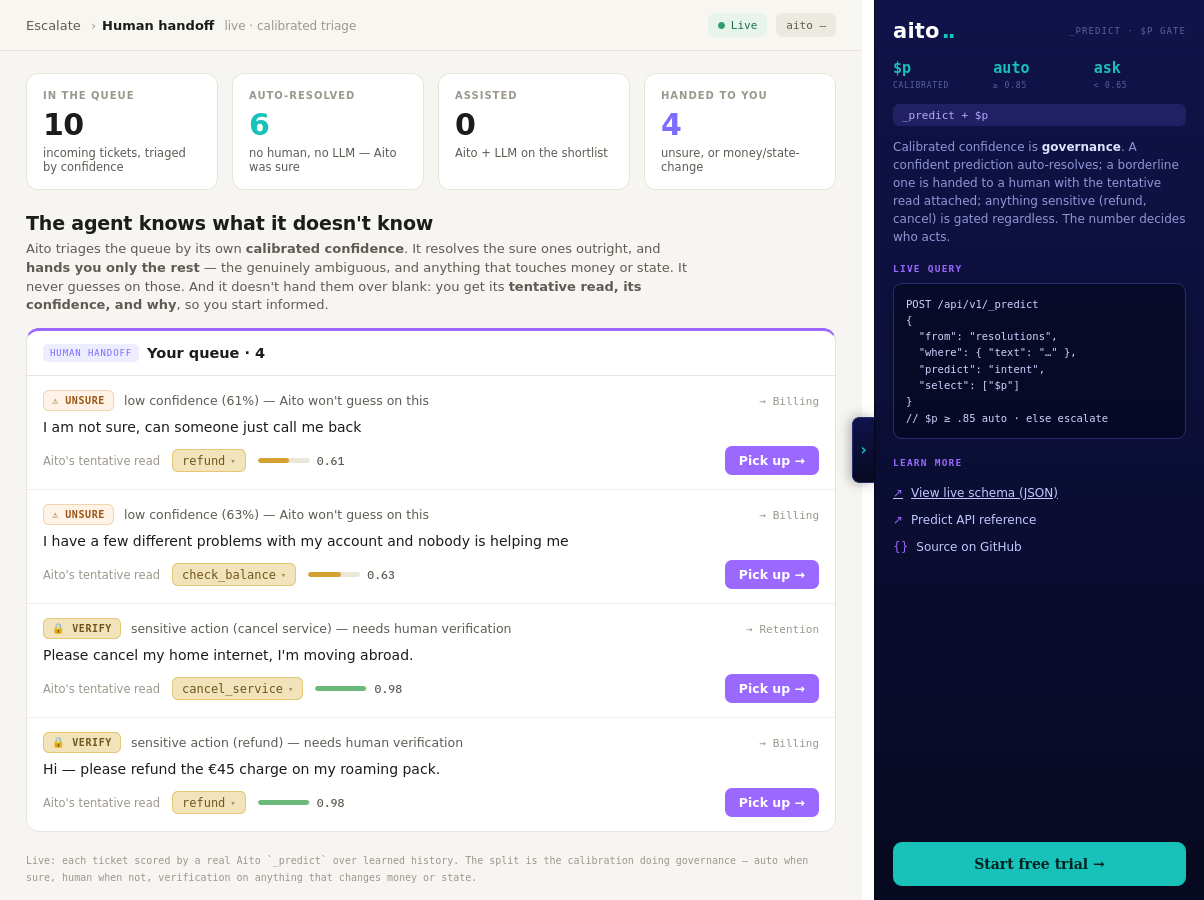
The Aito side is two _predict calls over past resolutions: the intent, with its $why, and then the parameter that intent needs. The LLM side is one structured call to a live model. The page runs both on the same ticket and shows the answers, the latency of each, the LLM's tokens and cost, and the Aito column's calibrated $p.
The $p is what makes the Aito answer usable for automation: confident reads resolve, uncertain ones go to a person with the tentative answer attached.
For the full architecture, see the technology overview. For the broader narrative across multiple use cases, read The Predictive Application.
See it live
This use case runs in the 🤖 Agent demo today. Click through to the live application and inspect the queries that produce the result.