The problem
Project plans get written from a template and the planner's memory. The template does not know that this kind of job usually needs a subcontractor in phase two, or which supplier the last three similar projects bought from.
The past projects know. Their tasks, assignees, and purchases are the evidence a planner would want in front of them while writing the plan.
How it works
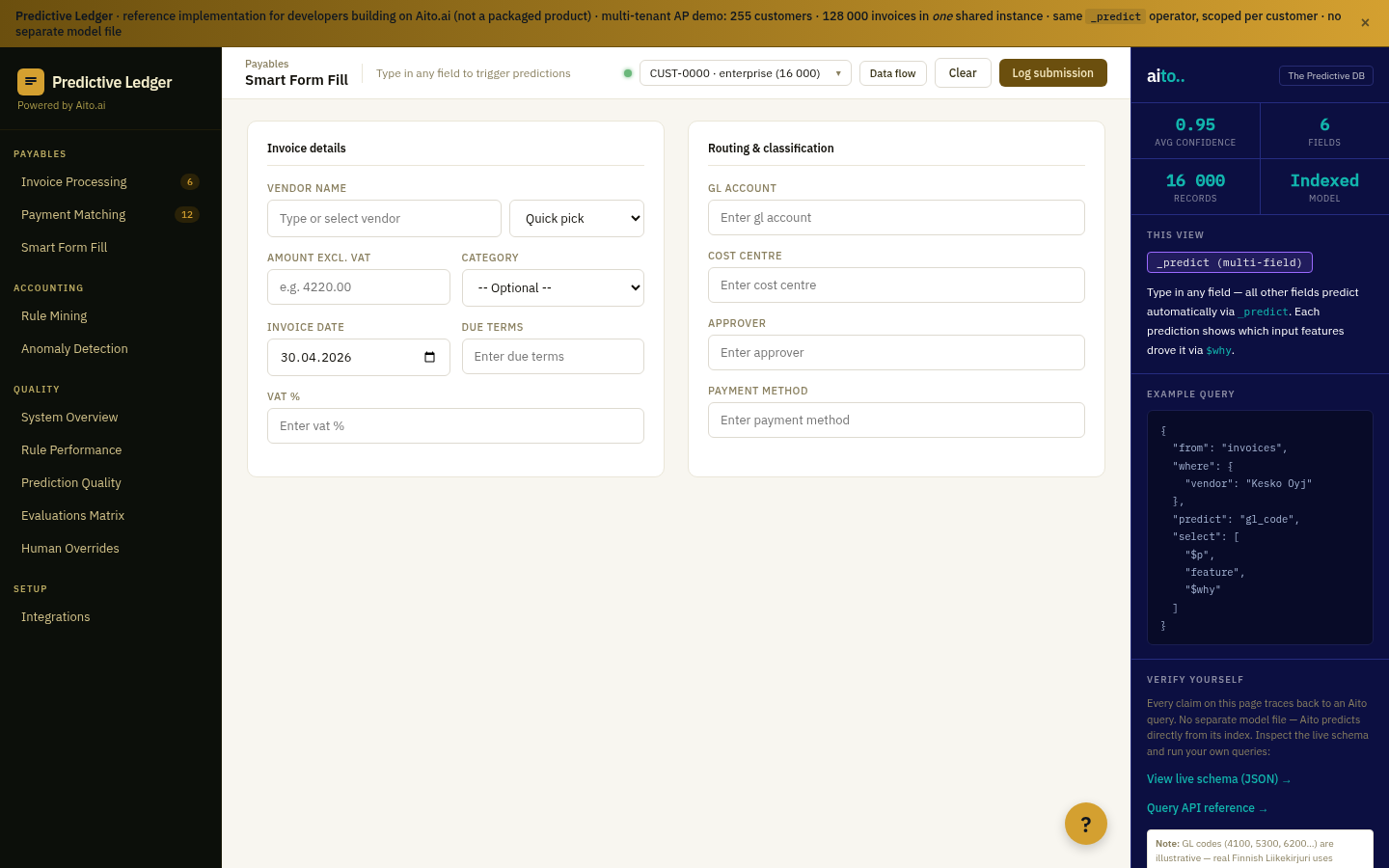
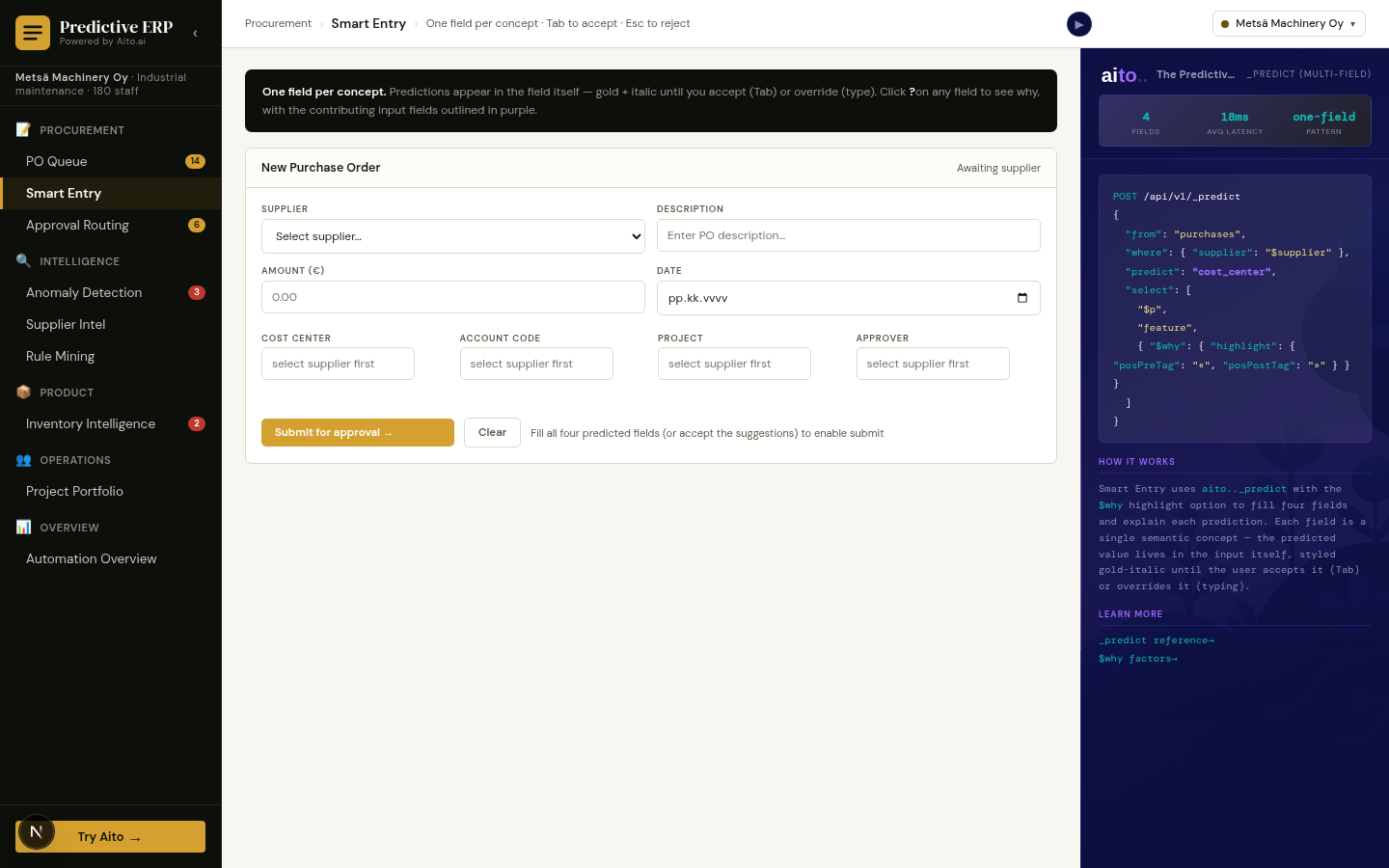
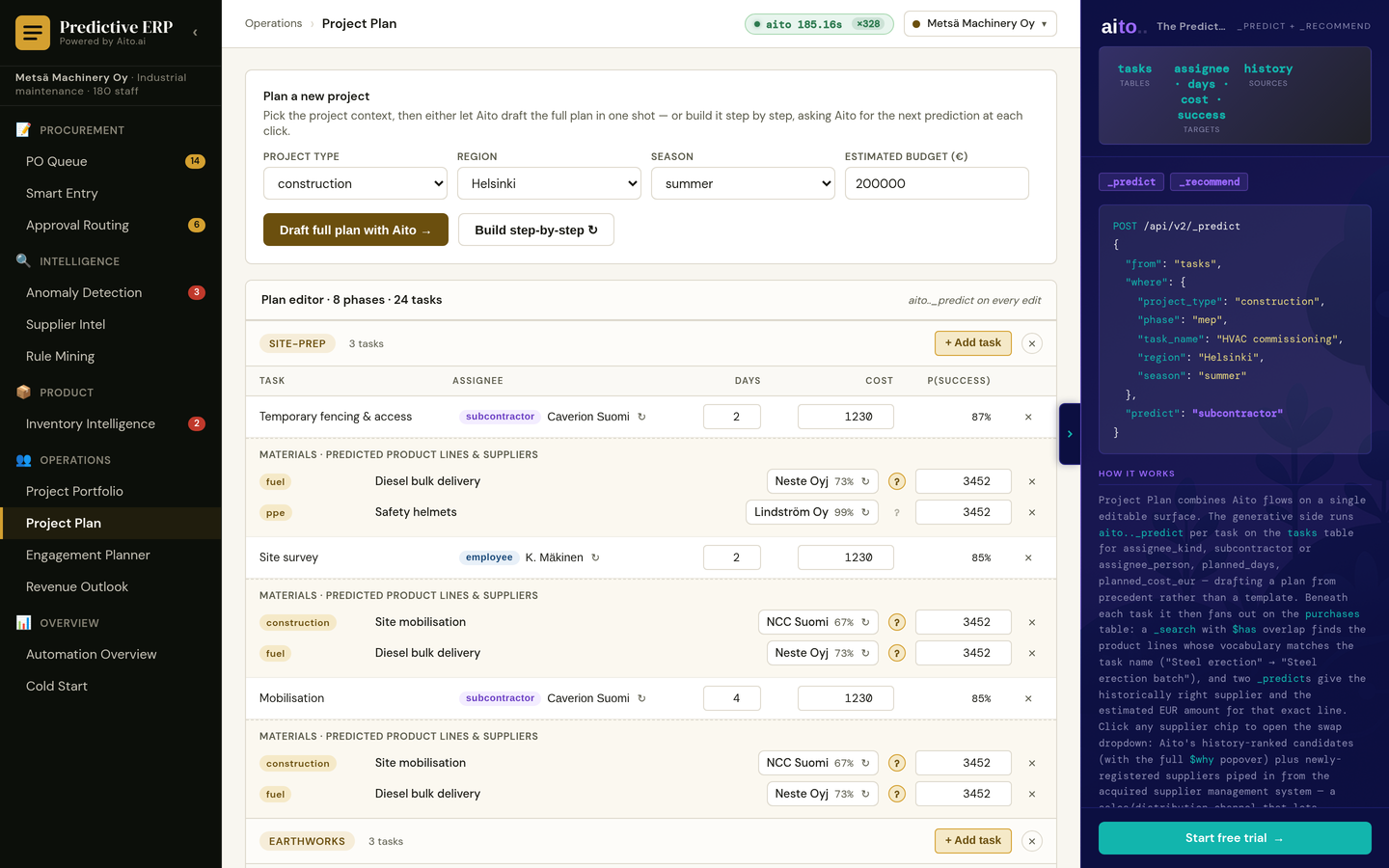
Each step of the plan is a prediction from past projects: _predict the next phase, the tasks in it, the kind of assignee and the person, then the materials, supplier, and amount from past purchases. Each prediction shows its $why, and the planner accepts it or swaps it.
The plan is assembled from many small predictions instead of one generated document, so every line can be checked against the history it came from.
For the full architecture, see the technology overview. For the broader narrative across multiple use cases, read The Predictive Application.
See it live
This use case runs in the 📋 ERP demo today. Click through to the live application and inspect the queries that produce the result.