The problem
Pipeline value is usually the optimistic sum of everything open, or a sum weighted by a stage percentage someone typed into the CRM years ago. Neither reflects what actually happened to deals like these.
How it works
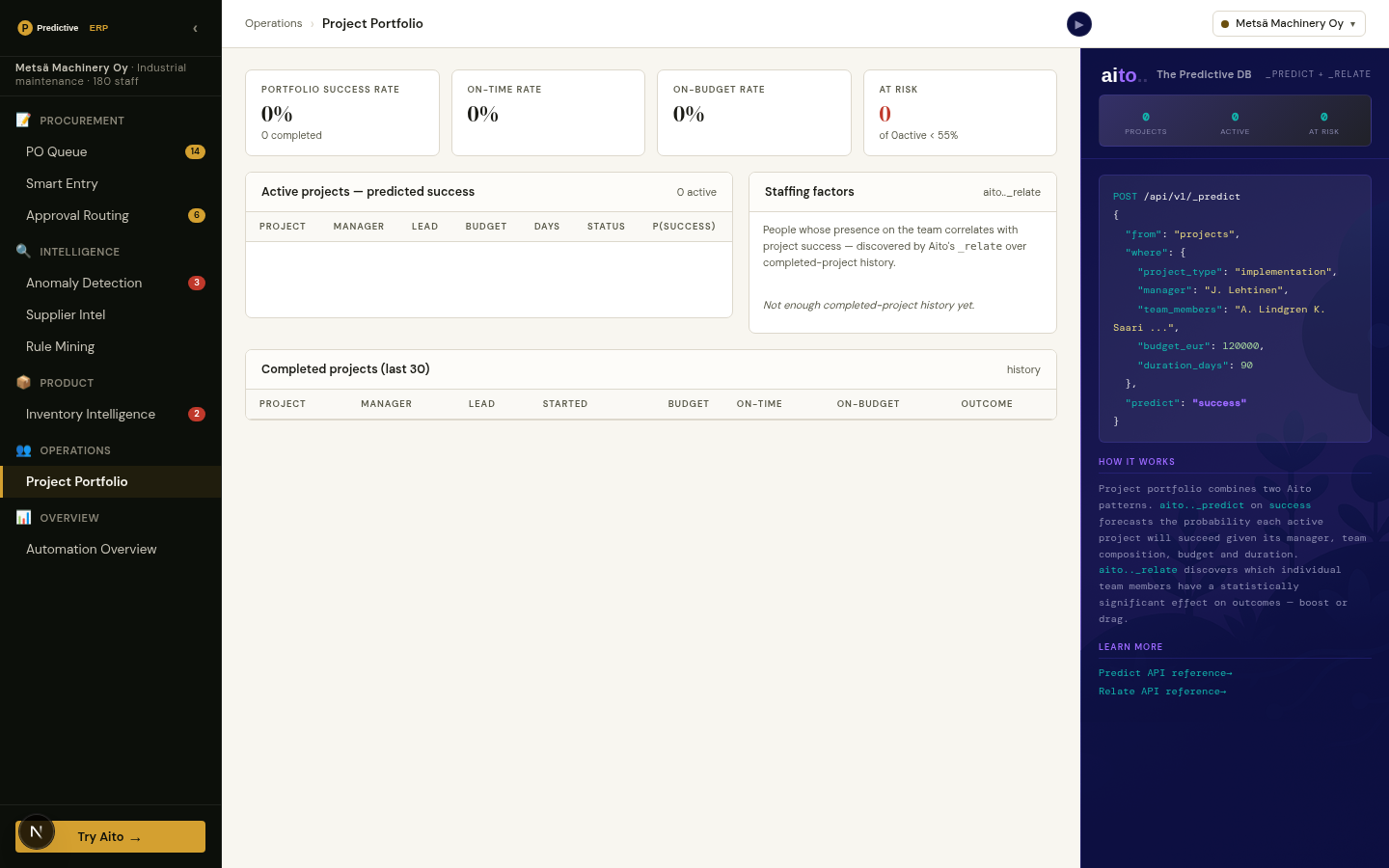
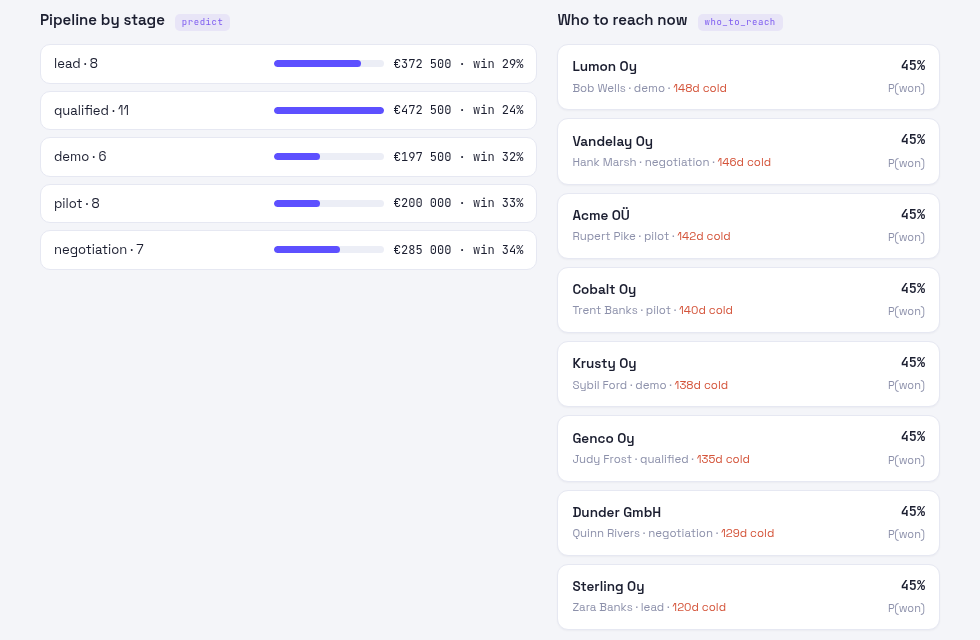
_predict of won for each open deal, conditioned on what is known before the outcome (stage, blocker, whether there is a champion), with $why for the factors. The weighted pipeline multiplies each deal by that probability.
The stage rates in the demo sit close together, from 24% to 34%, because on its synthetic history the stage alone says little about the outcome. That is calibration working: the numbers move as far as the evidence does, and no further.
For the full architecture, see the technology overview. For the broader narrative across multiple use cases, read The Predictive Application.
See it live
This use case runs in Company AI, a reference application you run yourself. There is no hosted demo, so the link opens its illustrated tour and source on GitHub: Company AI tour on GitHub →