The problem
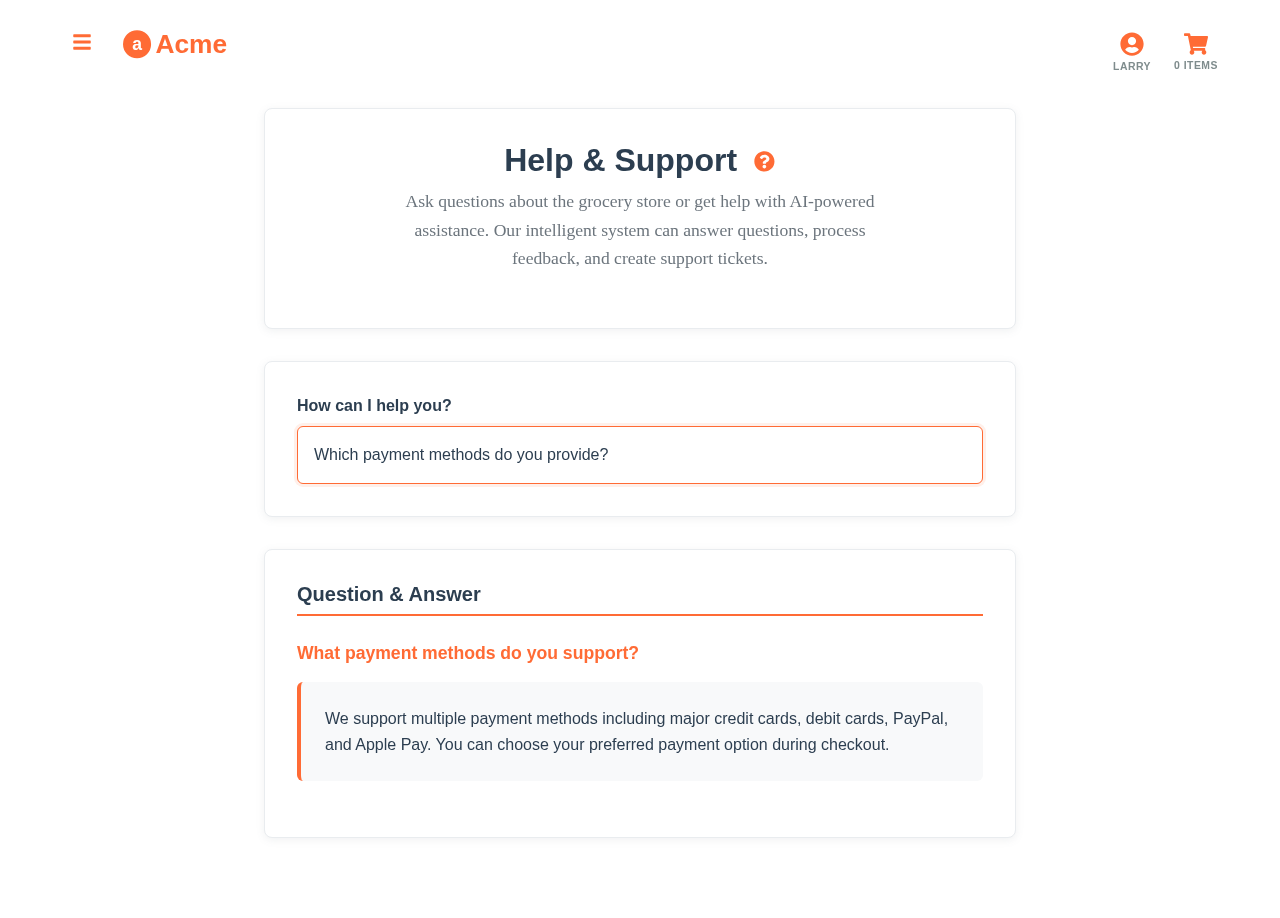
Conversational interfaces have become the default expected UX for product discovery and support. The customer types or speaks a question; the system answers. Most teams build this by routing the question to an LLM with a system prompt and hoping the answer is accurate. Sometimes it is; often it isn't, and the answer is uncalibrated, expensive per call, and untraceable to source data.
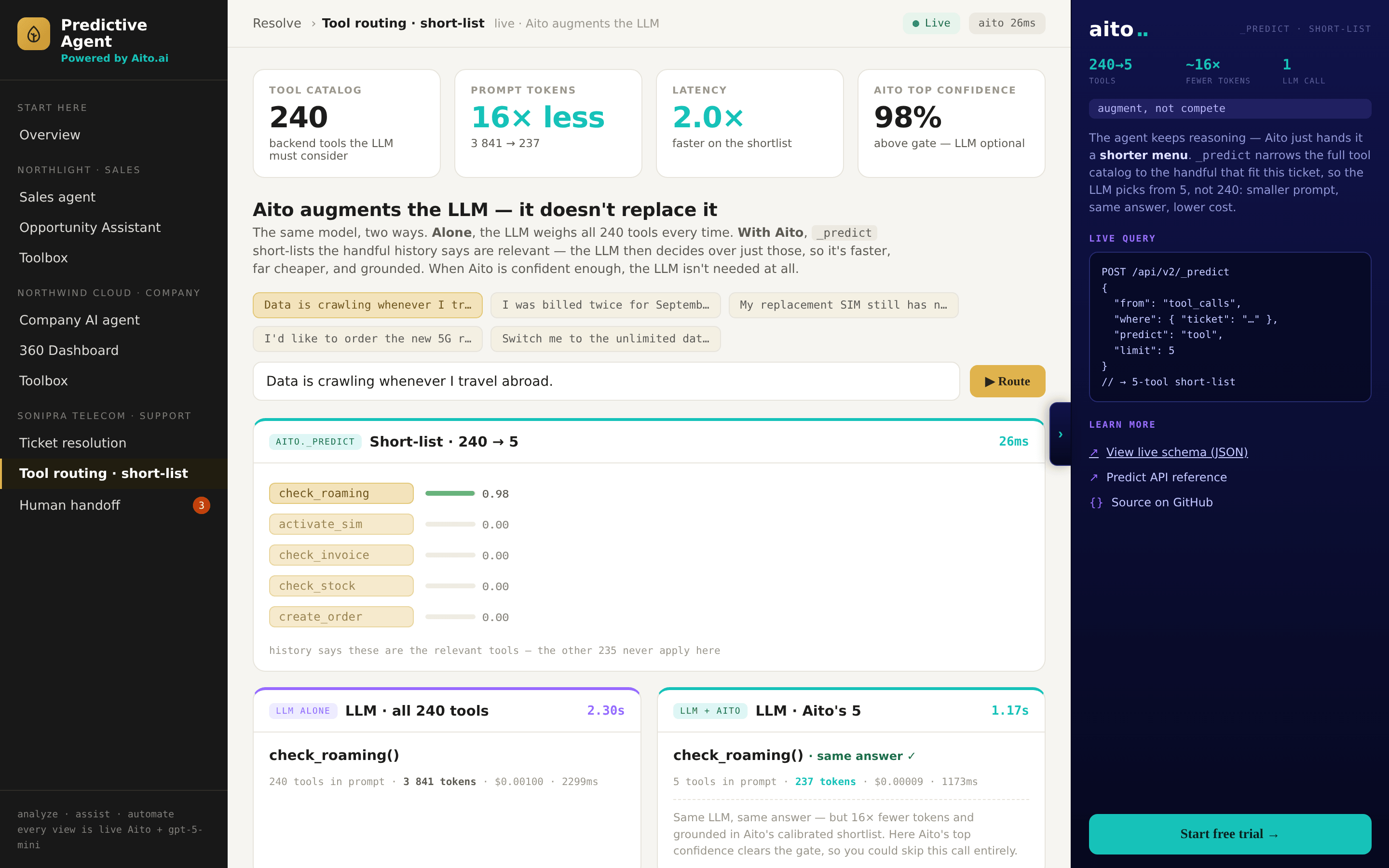
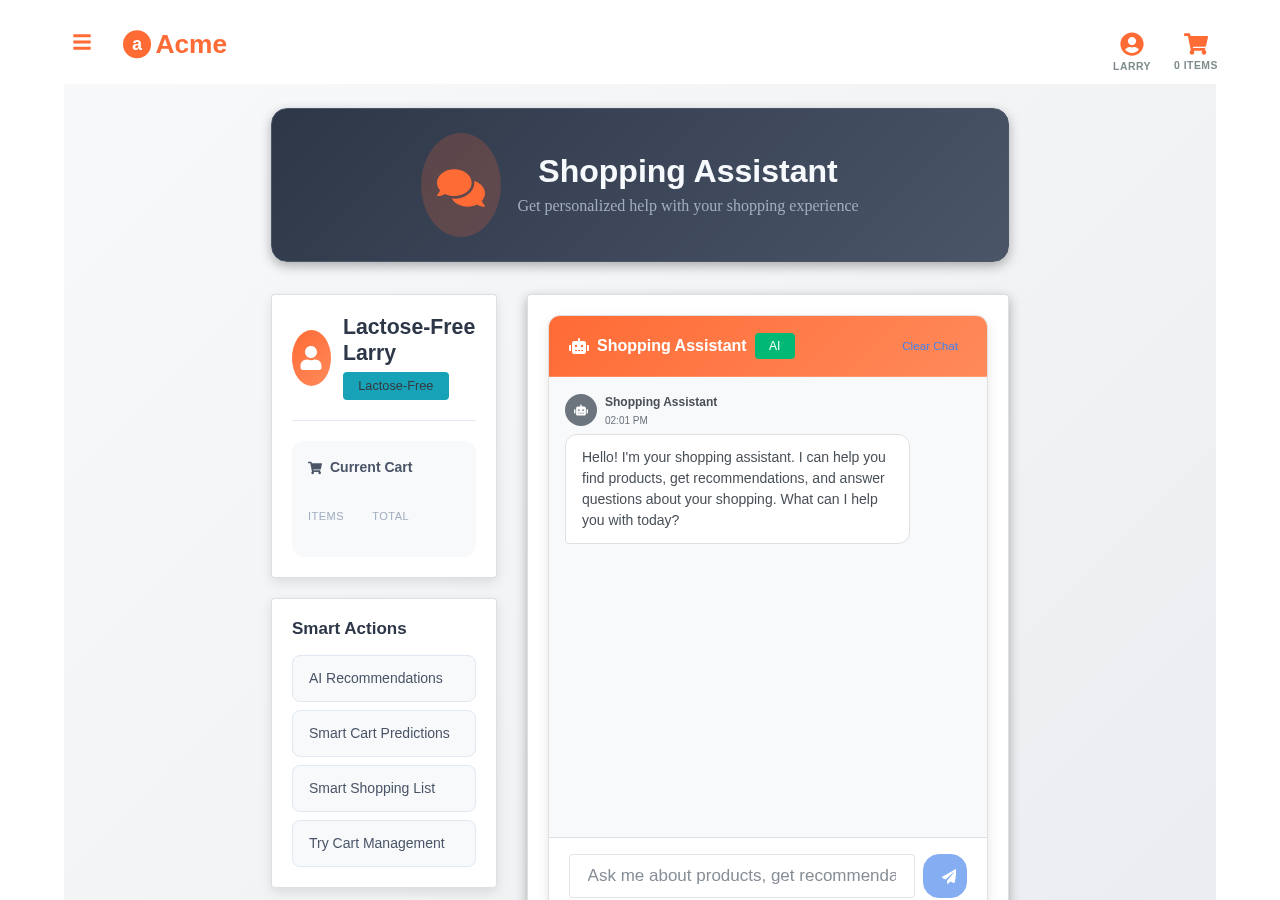
The right architecture composes the LLM with a predictive database. The LLM handles language — parsing the user's question, generating natural-language responses, managing the dialogue. The predictive database handles the structured-data decisions — which products to recommend, which answers are statistically supported, which routing is correct. The two together produce conversational interfaces that are natural-feeling AND grounded in real data.
How it works
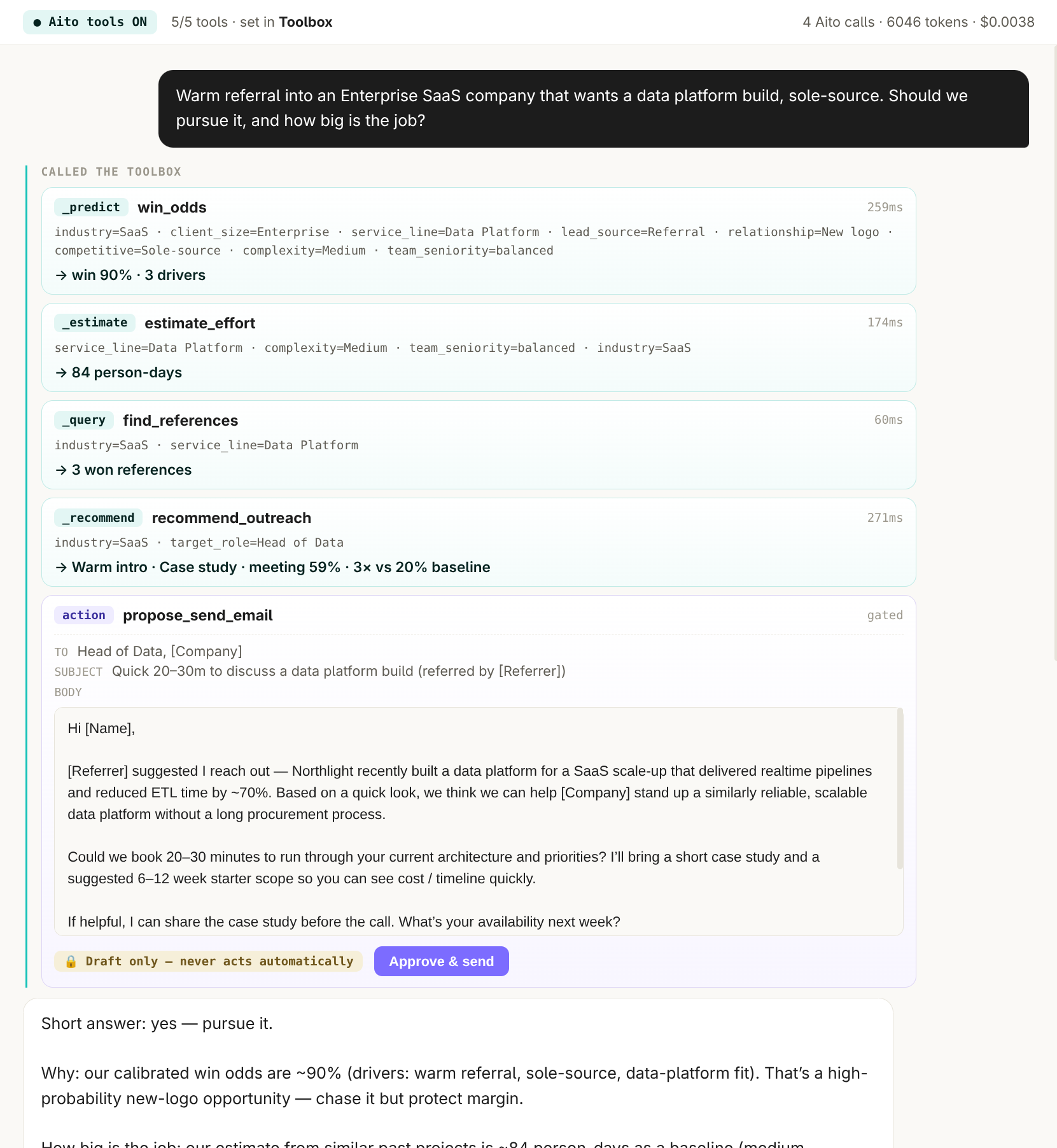
The conversation flow: user types a question. The LLM parses intent ("this is a product recommendation request") and extracts the structured parameters (user identity, mentioned categories, constraints). The application queries Aito with those parameters — _recommend products for this user with these constraints. Aito returns the ranked predictions with calibrated probabilities. The LLM frames the result as a natural-language response, citing the predicted top picks and the confidence behind them.
The split keeps each system doing what it's good at. The LLM handles language; the predictive database handles decisions. The LLM never decides which product to recommend on its own; it always asks the predictive layer. The result is a conversational interface where the conversational quality comes from the LLM and the recommendation quality comes from the predictive database.
{
  "from": "impressions",
  "where": {
    "customer": "alice@example.com",
    "product.text": { "$match": "lactose-free milk" }
  },
  "recommend": "product",
  "goal": { "click": true },
  "limit": 5
}
For the full architecture, see the technology overview. For the broader narrative across multiple use cases, read The Predictive Application.
See it live
This use case runs in the 🛍 Grocery demo today. Click through to the live application and inspect the queries that produce the result.
Frequently asked
Why not just use an LLM with retrieval-augmented generation (RAG)?
RAG retrieves text passages and lets the LLM compose the answer. For factual lookup over documents, RAG works well. For structured-data decisions (recommendations, routing, predictions with calibrated confidence), RAG produces uncalibrated answers because the LLM generates the confidence from language, not from the underlying probability. The split-architecture approach keeps calibration intact.
How does the assistant handle dialogue context across turns?
Dialogue context is the LLM's job. The LLM maintains the conversation state; on each turn, it decides whether the user's new input needs a new prediction or builds on the previous one. The predictive database is stateless per query; the application layer sequences the queries to match the dialogue.
What about latency — does this double the response time?
Two calls in series (LLM intent → Aito prediction → LLM response) adds one Aito round trip, milliseconds to tens of milliseconds, to a response dominated by the LLM calls. Modern dialogue UX accepts this latency; users perceive a coherent response. For very latency-sensitive applications, the calls can be partially parallelised.
Can the assistant explain its recommendations?
Yes. The predictive layer returns $why factor decomposition; the LLM phrases the explanation in natural language. "I'm suggesting this lactose-free milk because you've bought lactose-free products 8 of the last 10 visits." The explanation is grounded in actual signal, not generated.
How does this scale to high-volume use cases (millions of conversations)?
The predictive layer scales with infrastructure; the LLM layer scales with token cost. The total cost per conversation is dominated by LLM tokens. Caching common predictions in the application layer reduces per-conversation cost; well-tuned deployments handle millions of conversations on a single Aito instance.